
Most businesses invest time and effort into content creation, SEO, and ads — but still fail to see consistent growth.
The issue is not effort. It is lack of clarity.
Without analytics, you cannot clearly see what is working and what is not. You may be getting traffic, but you won’t know why users are leaving or why they are not converting.
This is where digital marketing analytics becomes essential. It connects your actions with actual results and helps you make better decisions over time.
If you are new to how the overall system works, you should first understand the foundation in this digital marketing guide because analytics only makes sense when you see the bigger picture.
Table of Contents
What is Digital Marketing Analytics
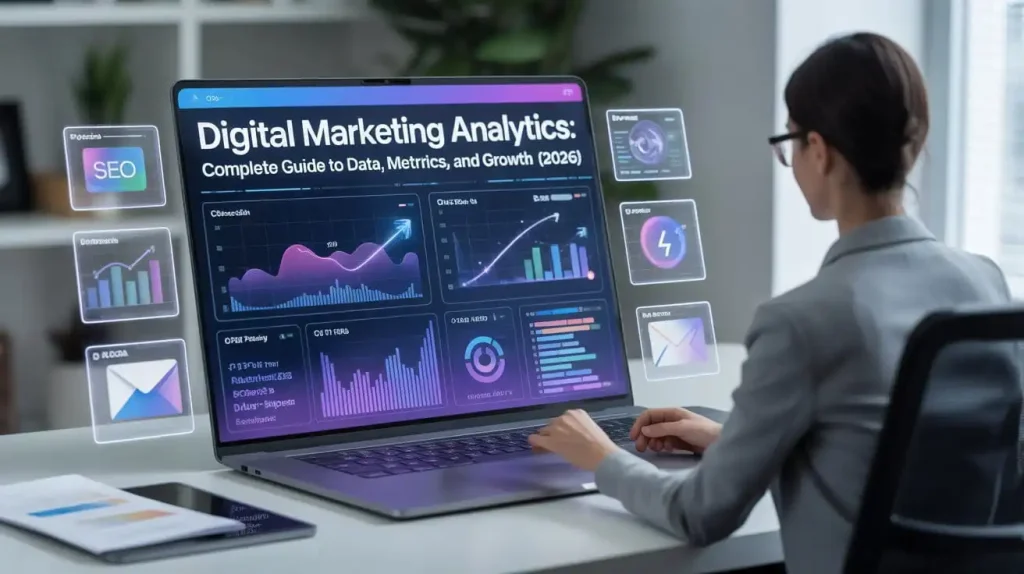
Digital marketing analytics is the process of collecting, analyzing, and interpreting data from your marketing activities.
But instead of thinking in technical terms, focus on what it actually helps you understand:
- Where your visitors are coming from
- What they are doing on your website
- Where they are dropping off
- What is leading to conversions
Without these insights, marketing becomes guesswork.
Why Analytics is the Backbone of Growth
You can create content daily, but without data, you cannot improve.
Analytics allows you to:
- Identify high-performing pages
- Understand weak areas
- Optimize your strategy
For example, if a page is getting traffic but no conversions, the issue is not traffic — it is user experience or intent mismatch.
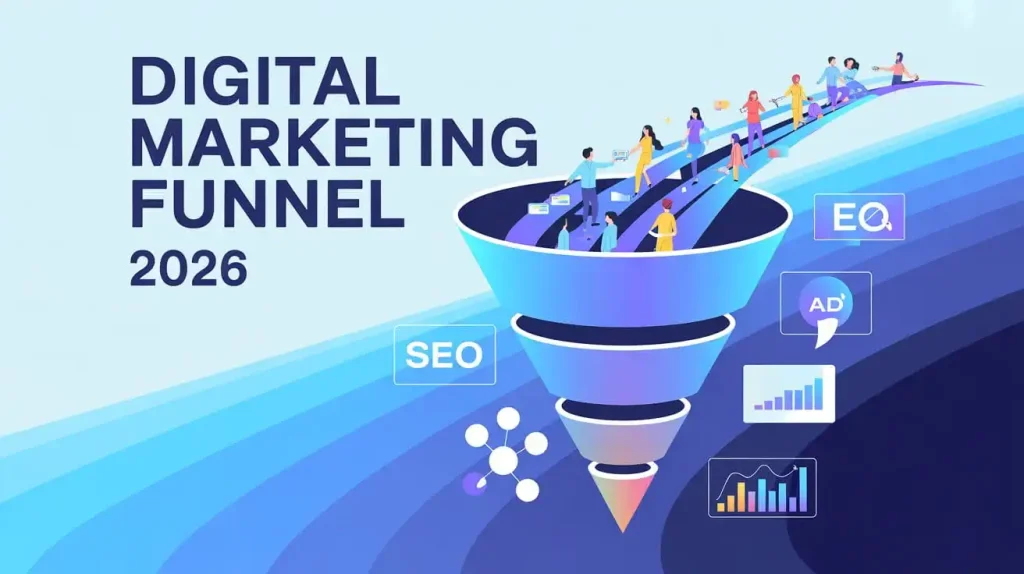
This is exactly where analytics connects with your funnel. If you haven’t already, you should understand how user flow works in a digital marketing funnel, because analytics becomes far more powerful when you view it through funnel stages.
Key Metrics That Actually Matter
Not all metrics are useful. Many beginners focus on numbers that look good but don’t drive results.
Core Metrics You Should Track
| Metric | Why It Matters |
| Traffic | Shows reach |
| Bounce Rate | Indicates relevance |
| Conversion Rate | Measures success |
| Session Duration | Shows engagement |
| Traffic Source | Identifies best channels |
Instead of tracking everything, focus on what helps you make decisions.
Understanding User Behavior (Where Real Insights Come From)
Looking at numbers alone is not enough. The real value comes from understanding behavior.
You should analyze:
- Which pages users visit first
- Where they leave
- What path they follow
This helps you identify gaps in your content and structure.
For example, if users land on your blog but never visit your service pages, your internal linking or funnel is weak.
Types of Digital Marketing Analytics
As you move forward, you will realize that analytics is not just one thing.
Types of Analytics
| Type | What It Means |
| Descriptive | What happened |
| Diagnostic | Why it happened |
| Predictive | What will happen |
| Prescriptive | What to do next |
Most websites only use descriptive analytics. Growth starts when you move toward predictive and prescriptive thinking.
Tools Used in Digital Marketing Analytics
You don’t need too many tools. You need clarity.
Start simple:
- A web analytics tool to track visitors
- SEO tools for keyword performance
- Heatmaps for user behavior
The goal is not more data — it is better understanding.
How AI is Transforming Digital Marketing Analytics
Analytics used to be manual and slow. Now AI has made it faster and smarter.
Instead of just showing reports, AI can:
- Detect patterns automatically
- Highlight unusual changes
- Predict user behavior
This shifts analytics from reactive to proactive.
Practical Use of AI in Analytics
AI becomes powerful when you apply it properly.
For example:
- You can identify which blog posts are most likely to convert
- You can detect where users drop off in your funnel
- You can get recommendations on what to improve
But one thing is important — AI gives insights, not decisions. Strategy still depends on you.
This is why understanding the role of a digital marketing strategist is important, because data alone is useless without proper interpretation.
How to Use Analytics to Improve Performance
Analytics should always lead to action.
A simple approach is:
- Identify a problem (low conversion, high bounce rate)
- Analyze the cause
- Make improvements
- Measure results
This cycle is what creates growth over time.
Conversion Rate Optimization (CRO)
One of the most valuable uses of analytics is improving conversions.
Instead of chasing more traffic, you improve results from existing traffic.
What You Can Improve
| Area | Action |
| Headlines | Make them clearer |
| CTAs | Make them stronger |
| Page Speed | Reduce loading time |
| Layout | Improve readability |
Even small improvements can lead to noticeable changes.
Common Analytics Mistakes
Even when businesses have data, they often misuse it.
Some common mistakes include:
- Tracking too many metrics
- Ignoring important patterns
- Not taking action
- Misinterpreting data
Analytics is useful only when it leads to better decisions.
Role of Strategy in Analytics
Analytics and strategy always go together.
Without strategy, data is just numbers.
A strategist uses analytics to:
- Improve campaigns
- Optimize funnels
- Increase ROI
If you treat analytics as a reporting tool instead of a decision-making tool, you will not get real value.
Future of Digital Marketing Analytics
Analytics is evolving quickly.
We are moving toward:
- Real-time insights
- AI-driven predictions
- Automated optimization
This means businesses will be able to react faster and make better decisions.
Conclusion
Digital marketing analytics is what turns effort into results.
Without it, you are working blindly. With it, every action becomes purposeful.
When combined with a structured funnel and strong strategy, analytics becomes one of the most powerful growth tools.
FAQs
What is digital marketing analytics?
Digital marketing analytics is the process of analyzing online data to improve marketing performance.
Why is digital marketing analytics important?
It helps businesses make informed decisions, improve ROI, and understand user behavior.
What are the key metrics in digital marketing?
Traffic, conversion rate, CTR, bounce rate, and customer acquisition cost.
Which tools are used for analytics?
Google Analytics, Search Console, Ahrefs, and SEMrush.
How does analytics improve conversions?
By identifying weak points and optimizing user experience.